Last updated November 18, 2026



Free written scope consultation - allowances, timeline, and change-order rules on paper before a single trade is scheduled
General Contractor Warning Signs Every Homeowner Should Know
Here’s the pattern we see most often in Pomona: a homeowner gets three bids, picks the middle one, and six weeks later the price has moved $9,000 with no explanation beyond “we found some stuff.” The warning signs were there in the paperwork. They just weren’t the ones the homeowner was watching for. Everyone knows to check for a contractor who won’t show a license or wants cash only. The signs that actually predict trouble three weeks into the job are quieter: how fast the written number appears, when the first payment gets requested, and whether the contract quietly strips your recourse. This guide walks through the signals that matter, so you can read a bid before you sign it and know what you’re really agreeing to in Pomona.
Quick Answer
The biggest red flags when hiring a contractor are a verbal estimate that never becomes a written price, a payment schedule front-loaded before any work is done, a contract that voids your warranty for reasons you can’t control, and slow or vague replies during the estimating phase. Any one of those predicts a job going sideways long after your deposit clears. A contractor who gives you a firm written price within 48 hours of a site visit, answers your questions in plain language, and shows you a written guarantee before signing is showing you how they’ll behave during construction.
Styles & brands we work with
- Kitchen remodeling
- Bathroom remodeling
- Home additions & ADU
- Roofing
- Windows & doors
- Driveway & pavers
- Fence
Table of Contents
- The 48-Hour Written Price Test
- The Verbal Estimate That Grows: How a Lowball Opener Works
- What Payment Timing Tells You About a Contractor’s Cash Flow
- How to Vet the Subcontractors Your GC Plans to Use
- The Communication Test: How They Reply Now Is How They’ll Build Later
- Contract Clauses: Standard vs. the Ones That Strip Your Recourse
- Change Orders and the Real Reason Prices Balloon After Demo Day
- Pomona-Specific Signals: Permits, Climate and Neighborhood Context
The 48-Hour Written Price Test
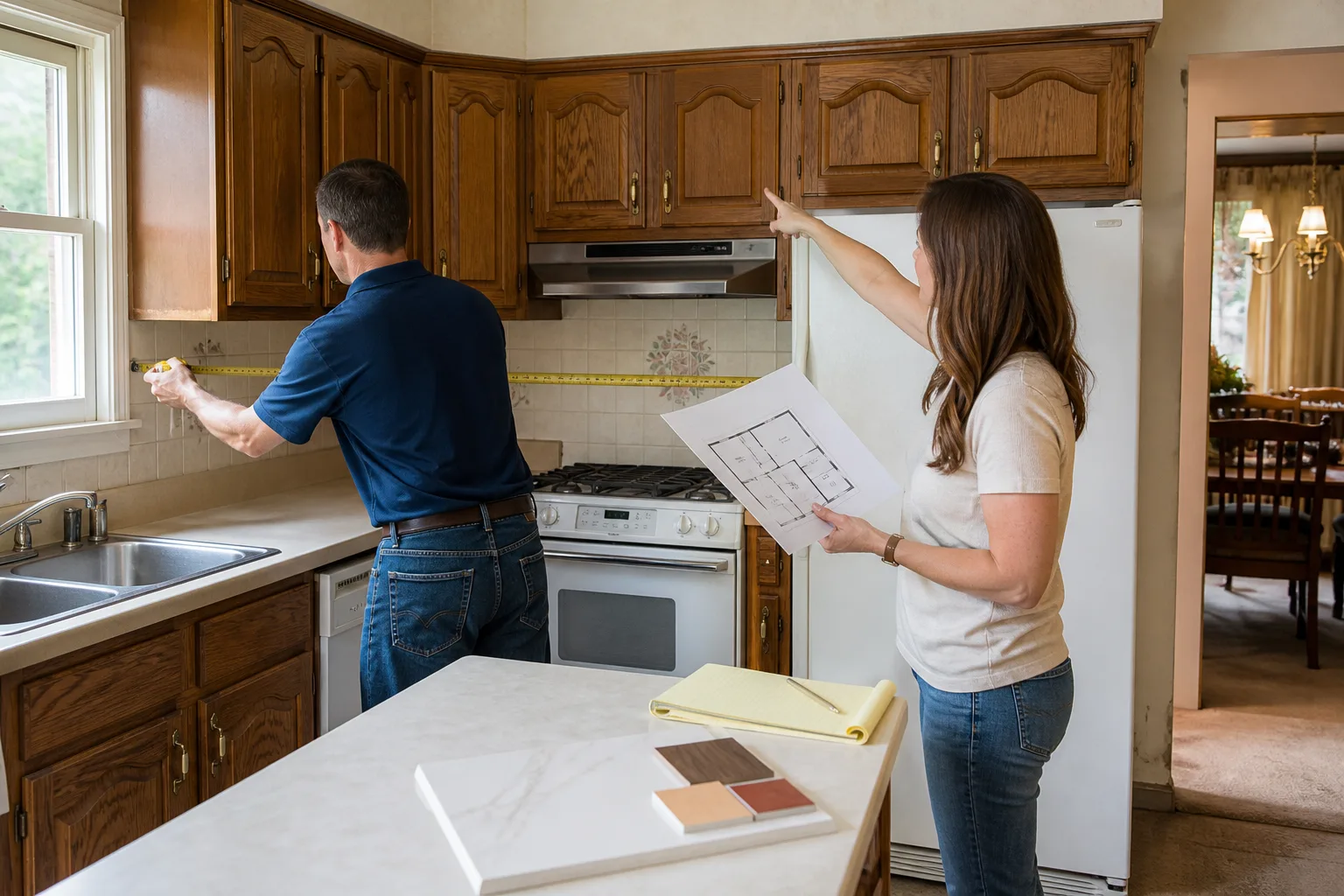
A contractor who can’t give you a written price within 48 hours of a site visit usually isn’t too busy. They’re pricing your job against other bids they hope to win first, which makes your project their backup plan. When a homeowner in Pomona asks us for a number, it goes in writing: line items, materials named, what’s included and what isn’t. That’s a low bar, but a surprising number of contractors never clear it.
What a real written estimate contains:
- Line items, not lump sums. Cabinet line, countertop material, tile, fixtures, labor, permit fees, and a contingency line, each priced separately.
- Named materials. “Quartz countertops” is a placeholder. “Cambria quartz, 3cm, color selected,” tells you what’s actually going into your home and who stands behind it.
- A stated scope. What’s excluded matters as much as what’s included. A contractor who stays silent on plumbing relocation or electrical upgrades leaves room to bill for it later.
- An expiration. Materials pricing moves. A written price with a firm 30- or 60-day hold is honest. A verbal ballpark that “depends on the market” is not a number you can hold anyone to.
- A signature line. If you can’t sign it, you can’t enforce it.
In our experience working across Pomona, the written number on day one is the number on the invoice. That’s what our General Contractor in Pomona page describes, and it’s the standard we write into every estimate. If a bid arrives as a text message with a range, ask for the written version. How they respond to that request tells you a lot.
The Verbal Estimate That Grows: How a Lowball Opener Works
The lowball opener is a hook. A contractor quotes you $14,000 for a kitchen when every other bid is $22,000 to $26,000. You feel like you’ve won something. Then demo day arrives and the price “has to” move, because of what’s behind the wall, because the cabinets were a different line than quoted, because the electrical wasn’t included. Three weeks later you’re at $24,000 and you’re too far in to start over.
Spotting the pattern takes two habits:
- Check the gap. If one bid is more than 20% below the others, ask what it leaves out. Cabinets are the easiest place to cut; there’s a wide spread between stock and semi-custom, and KraftMaid or Wellborn lines cost more than the no-name cabinet that gets quoted and then swapped.
- Look for the words “starting at.” A written range with an upper bound is a price. A number described as a starting point is a sales tactic.
Real numbers for context: kitchen remodels in the Pomona area typically run $18,000 to $55,000 depending on layout, cabinet line and countertop material. Bathroom remodels sit in the $9,000 to $25,000 range. If a bid comes in far below those bands, the missing money is somewhere else. A written quote names what’s included, what’s excluded, and how a change in scope gets priced. That’s the difference between a bid you can hold someone to and a verbal number that drifts.
What Payment Timing Tells You About a Contractor’s Cash Flow
Payment schedule is one of the most revealing parts of a bid, and the one homeowners skim past fastest. Asking for half the job total before any work starts is a warning, not a standard. A contractor who requires a large deposit up front is often funding your job with somebody else’s deposit from a project they haven’t finished.
What a healthy schedule looks like:
- A modest deposit. Enough to order materials, generally 10% to 20%, not 40% to 50% before the first day.
- Payments tied to milestones. Demo complete, rough-in passed, cabinets set, final walkthrough. Each payment has a thing it follows, not a date it precedes.
- Money held back at the end. A final payment tied to punch list completion and a passed inspection gives you leverage if something’s unfinished.
- No check written to a person’s name. Payments go to a business entity, always, with a receipt.
If the schedule is front-loaded, ask what the deposit covers. A straight answer with materials attached is fine. A shrug is your signal to keep the deposit small or walk. When a homeowner in Pomona hands us a schedule from another bid and asks us to explain it, most of the time the pattern is clear before we get to the second line. We put a written payment schedule in every quote so there’s nothing to interpret later.
How to Vet the Subcontractors Your GC Plans to Use
The general contractor’s license and insurance matter, but so does everyone who actually does the work. Most remodeling jobs get broken across trades: plumbing, electrical, HVAC, drywall, tile. Your GC may be licensed for construction while plumbing and electrical go to several people who may or may not carry their own coverage. If a helper gets hurt on your property and isn’t covered, the question is your homeowner’s insurance, not theirs.
Ask these before signing, and don’t accept “we handle all that”:
- Who is doing the electrical and plumbing? Get the names of the companies, not just the trades.
- Get the license numbers. Confirm each specialty trade holds its own license for that work; general contractor licenses don’t cover licensed specialty trades.
- Request certificates of insurance. General liability and workers’ compensation certificates for the GC and for the subs they plan to use. Ask them to name you as additionally insured on the general liability policy for the project.
- Ask who pays the subs. On a reputable job, the GC pays subcontractors out of the schedule you agreed to. If you hear “we’ll have you pay them directly,” that’s a cash-flow signal.
A GC who can name their subs and produce certificates within a day is operating cleanly. One who dodges the question, or says the insurance covers everyone, is asking you to take a risk you didn’t agree to. We run background checks and require uniforms on every job because you should know who’s in your home before they knock. The same principle applies to the subs a GC brings in.
The Communication Test: How They Reply Now Is How They’ll Build Later
The estimate phase is your trial run. During those few weeks you’re seeing how a contractor handles questions, delays, bad news, and change requests. They’ll handle these things the same way once the walls are open and the stakes are higher.
Watch for these signals:
- Response time. Replies within a day or two during bidding is normal. Silence for a week between questions is not.
- Plain language. If they can’t explain the substrate (the moisture-resistant layer behind your tile) in a sentence, they’ll talk past you at the punch list. A contractor who explains a choice and lets you make it is showing you how they’ll operate.
- Written follow-up. Answers to real questions come in writing, so you can compare bids. Verbal answers that don’t survive into the contract are answers nobody’s held to.
- Whether they arrive when they say. If the site visit was rescheduled twice with no notice, the same thing happens on install day.
- Whether the call is answered by a person. Voicemail during bidding often becomes voicemail during construction. A live answer, even on a Sunday, is a real operational advantage.
If a contractor’s estimate phase felt like pulling teeth, the answer isn’t that they’re just busy. It’s what they showed you. A written price, a clear arrival window, and a live person on the phone are all testable before you spend anything.
Contract Clauses: Standard vs. the Ones That Strip Your Recourse
Some clauses are standard. Others quietly take away your ability to hold the contractor to the job. The trouble is that a bad clause can read like a good one. These are the two categories worth separating before you sign.
Standard and fair:
- A written scope of work with an itemized price.
- Payment tied to milestones.
- A change-order process in writing, signed by both parties, before extra work begins.
- A workmanship warranty, spelled out in writing, with a clear length and what’s covered.
- A dispute process (mediation, or a defined correction window) that gives you a step before lawyers.
Clauses that quietly strip your recourse:
- Binding arbitration in a distant location. Removes your right to court and makes the process expensive enough that you’ll drop it.
- A warranty that’s voided by things out of your control. For example, “warranty void if humidity is above X% at any time” – in a Pomona kitchen with regular cooking, you can’t guarantee that and the contractor knows it.
- “Time and materials not to exceed” without a cap. Reads like a ceiling, often isn’t.
- “Contractor not responsible for damage during delivery.” You still pay for the broken cabinet.
- Clauses requiring written notice of defects within a few days. Too short to catch real problems.
We put the 365-Day Done Right Promise in writing on every job: if the work fails inside the guarantee period, we come back and fix it, at no charge. That’s what a guarantee should feel like – something you can read, not something you’re told on the way out the door. Compare any contract against those terms and ask about the ones that read differently from what was said in the meeting. Our Bathroom Remodeling in Pomona page shows how that reads in a typical bid.
Change Orders and the Real Reason Prices Balloon After Demo Day
Change orders aren’t the problem. Discovery is normal in remodeling; the wall behind the tile doesn’t tell anyone what’s there until it comes down. The problem is a contractor who treats discovery as the place where the real money shows up.
The right pattern for a change order:
- The contractor stops work and explains what they found, with photos.
- They write the cost of the fix and the schedule impact in a change order.
- You sign before the work continues. You always have the option to pause and reconsider.
- Original scope stays priced as written. Change orders only cover the newly discovered work, not re-pricing the whole job.
The wrong pattern is a phone call that ends with “you need to approve this or the job stops.” That’s not a change order, that’s leverage applied where your only option is to say yes. One way to reduce discovery surprises: choose a contractor who opens walls before the bid is final, not during construction. In an older Pomona home – and much of the housing stock here goes back to the 1920s and 1950s – we often find galvanized plumbing or cloth wiring when a wall comes open, which changes the scope. Naming that upfront and pricing a contingency line is how a written price survives demo day.
Pomona-Specific Signals: Permits, Climate and Neighborhood Context
Some warning signs are local to Southern California and Pomona in particular. These are the ones that show up in the permit office and on the inspection schedule.
- Permits. Kitchen and bathroom remodels in Pomona generally require permits for plumbing, electrical and structural changes. A contractor who says “we don’t pull permits for a job this size” is either wrong or planning to skip them. Unpermitted work can complicate a future sale and voids some insurance claims.
- Inspection schedule. Real contractors know their inspection window. A bid without a permit line is a bid with a hidden future cost.
- Local climate. Pomona sits in a hot, dry inland climate, with warm summers and dry Santa Ana wind events in fall. That matters for exterior siding – James Hardie fiber cement holds up to the heat and sun better than wood in this region – and for the moisture control around kitchen and bath tile, where the substrate behind the tile fails if it isn’t specified correctly.
- Neighborhood context. In Lincoln Park and Wilton Heights, we regularly see older homes where cabinet and countertop layouts run up against original framing that’s settled unevenly. In some of the newer builds around Phillips Ranch, the challenge flips: tight modern layouts with shared walls and fewer options for moving plumbing. A contractor who doesn’t ask which neighborhood you’re in during the estimate phase isn’t pricing the job they’re going to see.
- SoCal market pricing. Materials and labor in the Pomona area run differently than coastal quotes. A bid with no southern California pricing context is a bid you’ll see re-quoted later.
Our Kitchen Remodeling in Pomona page lays out the pricing bands and permit steps for the projects we do most often here. The principles hold across any contractor bid you’re comparing.
Common Mistakes to Avoid
- Picking the middle bid without reading what’s included. The middle bid is often the most honest one, but that’s a guess. Read each bid’s scope line by line to see what’s actually being quoted.
- Paying a large deposit before any work starts. In Pomona, that pattern often signals a contractor funding current projects with the next homeowner’s check. Keep the deposit to cover materials, not to bankroll a business.
- Accepting a verbal quote as final. A verbal number is a sales pitch. Get the price in writing with a signature line before you commit.
- Skipping the insurance certificates for the subs. Contractor insurance doesn’t cover the plumbing and electrical trades. Ask for each certificate separately.
- Assuming the warranty is what was said in the meeting. If it isn’t in the contract, it isn’t coverage. Get the length and what’s covered written down.
- Ignoring permit signs. A contractor who won’t pull permits on a kitchen or bath is writing a problem you’ll deal with at resale.
- Not asking what happens after the job. Repairs fail sometimes even on good work. Ask whether a return visit after the final payment is covered, and get it in writing.
See the difference
 Before
 After
 Before
 After
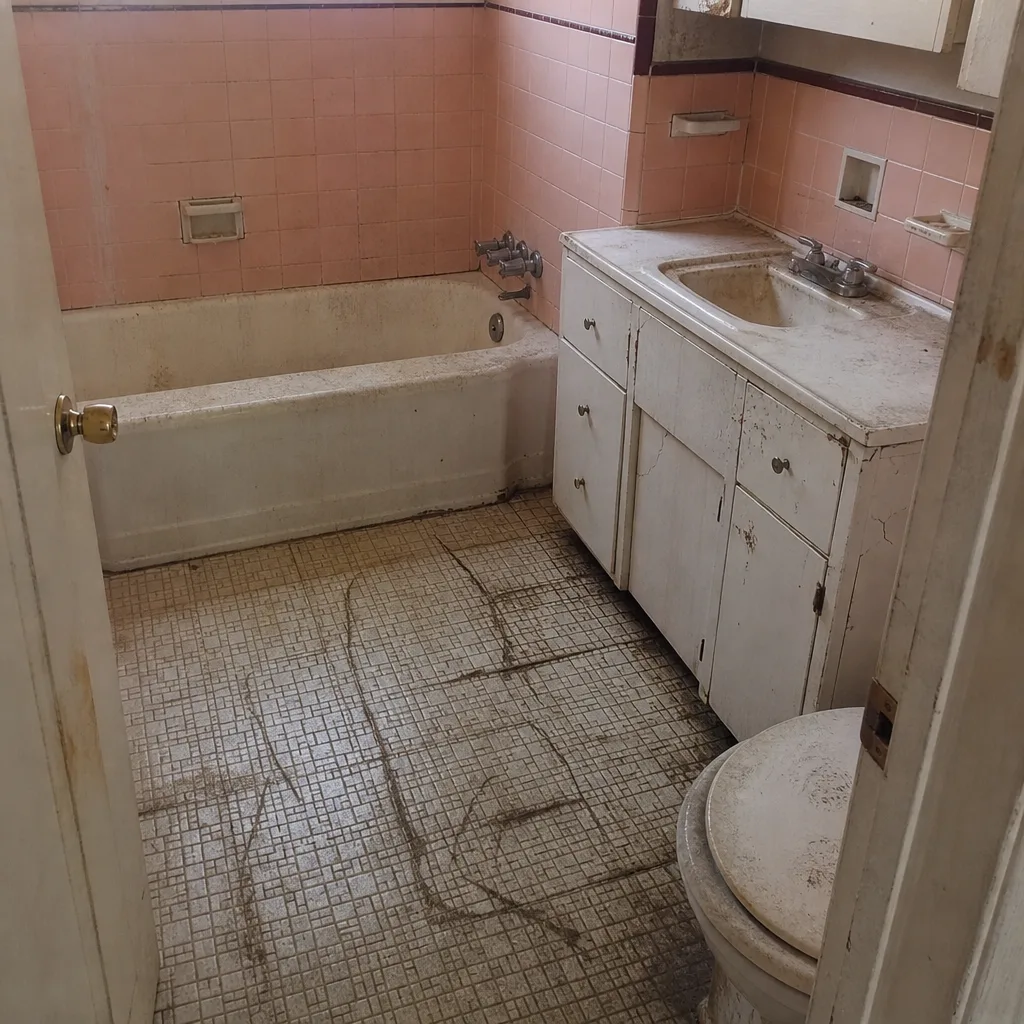 Before
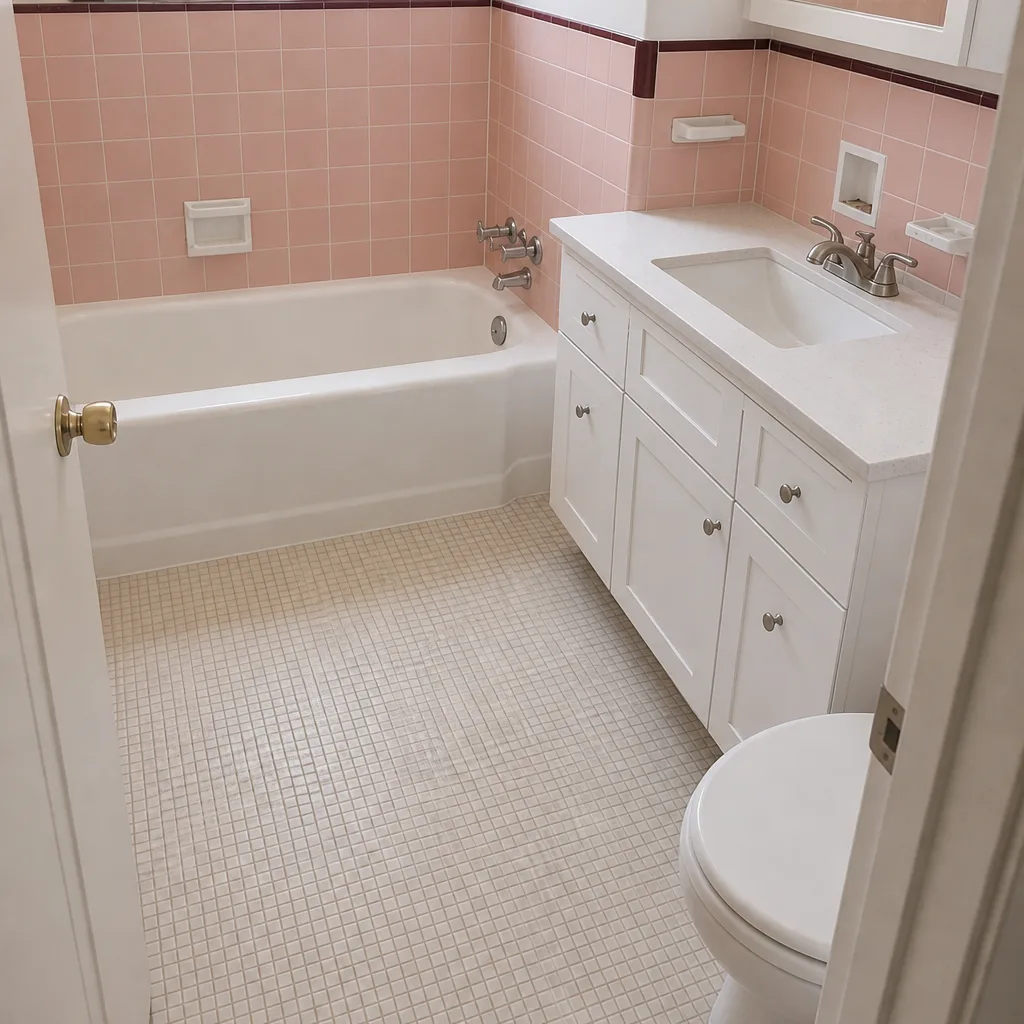 After
When to Call a Professional
Some signals send a strong enough message that the next call should be to another contractor. If a bid was verbal, if the deposit is half up front, if the contract has an arbitration clause that names a courthouse two counties away, if the subs’ insurance is “handled” but not shown, if a permit isn’t being pulled on a kitchen or bath remodel, or if the warranty reads as vague – we recommend you pause and get a written comparison before signing anything. The same goes if a contractor won’t answer a direct question in writing before the deal is signed. Any one of those is worth a second opinion. Penhallow Remodeling Pomona offers free estimates in Pomona – call (833) 620-5046 and we’ll give you a written number you can hold us to, with a written guarantee that spells out what happens if something fails.
Frequently Asked Questions

Generally 10% to 20% of the job total, which covers ordering materials. Anything above 30% up front – especially 40% to 50% before any work starts – is a cash-flow signal worth asking about. The rest of the payments should be tied to milestones like demo complete, rough-in passed or cabinets set. Call (833) 620-5046 for an exact quote – estimates are free, and we’ll show you a full written payment schedule before you sign.
Line items, named materials (down to cabinet line and countertop brand, like Cambria or Silestone), an explicit in-scope and out-of-scope list, permit fees, a contingency line, a payment schedule and a signature line. A verbal quote almost never includes the exclusions, which is where the price grows later. Call (833) 620-5046 to see what a written bid looks like for your project.
Yes. A verbal estimate that never becomes a written number is the single clearest predictor of a price that moves after demo day. It’s not usually the contractor who can’t write it – it’s the contractor who wants room to adjust it later. Ask for the written price within 48 hours of the site visit. If you don’t get one, that’s your answer.
Ask for each trade’s name, license number and certificate of insurance – general liability and, where applicable, workers’ compensation – in writing before signing. In California, licensed plumbing, electrical and HVAC trades hold their own licenses separate from the general contractor’s, and those numbers can be checked on the state board’s lookup. If a GC won’t name their subs before the job, that’s a signal to get a written comparison from another bid.
Standard clauses cover scope, itemized price, milestone payments, a written change-order process and a defined workmanship warranty. Clauses that strip recourse are the ones that push disputes into distant binding arbitration, void the warranty for conditions you can’t control, or require written notice of defects within a few days of completion. Every one of those should be answered before you sign. Call (833) 620-5046 for a free estimate that includes a copy of our written guarantee terms before any work starts.
They should for any job with plumbing, electrical or structural changes – permits are required in Pomona for that scope of work. A contractor who says otherwise is either wrong or planning to skip them, and unpermitted work can complicate a future sale or an insurance claim. Ask for the permit line in the estimate. Call (833) 620-5046 to walk through what a permit-covered bid looks like on your project.
The Bottom Line
The warning signs that actually cost you money aren’t the obvious ones. A missing license gets noticed in the first meeting. A verbal estimate that never becomes a written number, a deposit asking for half the job total, a warranty voided by normal humidity, a contract that sends disputes two counties away – those are the patterns that go sideways three weeks in, after your deposit has cleared and the crew is already in the house. The fix is simple: get a written price within 48 hours, read what’s included and excluded, verify each sub’s coverage, check for a permit line, and read the warranty. The written number is the number. For a free written estimate in Pomona, call (833) 620-5046 and we’ll put it in writing before anything starts.
If you want to see how this plays out across the projects we do most often in Pomona, start with the Penhallow Remodeling Pomona home page or check our Bathroom Remodeling in Pomona page for the written-guarantee standard we apply to every job.
Written by the team at Penhallow Remodeling Pomona.