
Last updated November 18, 2026

Free written scope consultation - allowances, timeline, and change-order rules on paper before a single trade is scheduled
How Long Does Kitchen Remodeling Take? Timelines and What to Expect
Here’s the number that catches most homeowners off guard: a full kitchen remodel in Pomona takes 6 – 10 weeks of construction, but the families who plan badly end up 4 – 6 months without a working kitchen. The gap isn’t the crew’s speed. It’s the 8 – 10 weeks before demo day that almost every timeline leaves out – design decisions, permit review through the City of Pomona, cabinet fabrication, and stone availability. This guide maps the whole calendar from your first contractor meeting to the final walkthrough, so you can plan around the real schedule instead of the one on a verbal handshake. You’ll learn what each phase actually takes, why the countertop controls your end date, and what a slow week on site really means.
Styles & brands we work with
- Kitchen remodeling
- Bathroom remodeling
- Home additions & ADU
- Roofing
- Windows & doors
- Driveway & pavers
- Fence
Quick Answer
A full kitchen remodel typically takes 6 – 10 weeks of on-site construction, plus 8 – 12 weeks of pre-construction work (design, permits, and cabinet fabrication) on the front end – so plan on roughly 4 – 5 months of elapsed time from first meeting to final walkthrough. A cosmetic refresh (paint, new hardware, a countertop swap) can finish in 5 – 10 days. In Pomona, cabinet lead times and the post-install countertop template are the two items that decide your end date, not the tile or the paint.
Table of Contents
- The Full Project Calendar, Start to Finish
- Phase 1: What Happens Before Demo Day
- Phase 2: Permits and the City of Pomona
- Cabinet Lead Times and Countertop Bottleneck
- Phase 3: What Happens Each Week On Site
- Cosmetic vs. Full Gut: Benchmarking Your Scope
- Verbal “About Six Weeks” vs. a Written Schedule
- Common Mistakes to Avoid
The Full Project Calendar, Start to Finish
Most contractors quote you the construction window and stop. That’s not the project timeline – that’s one phase of it. From the homeowner’s chair, the calendar has three phases, and only the last one involves a crew in your house. Below is the full elapsed-time picture we walk every Pomona client through before signing anything.
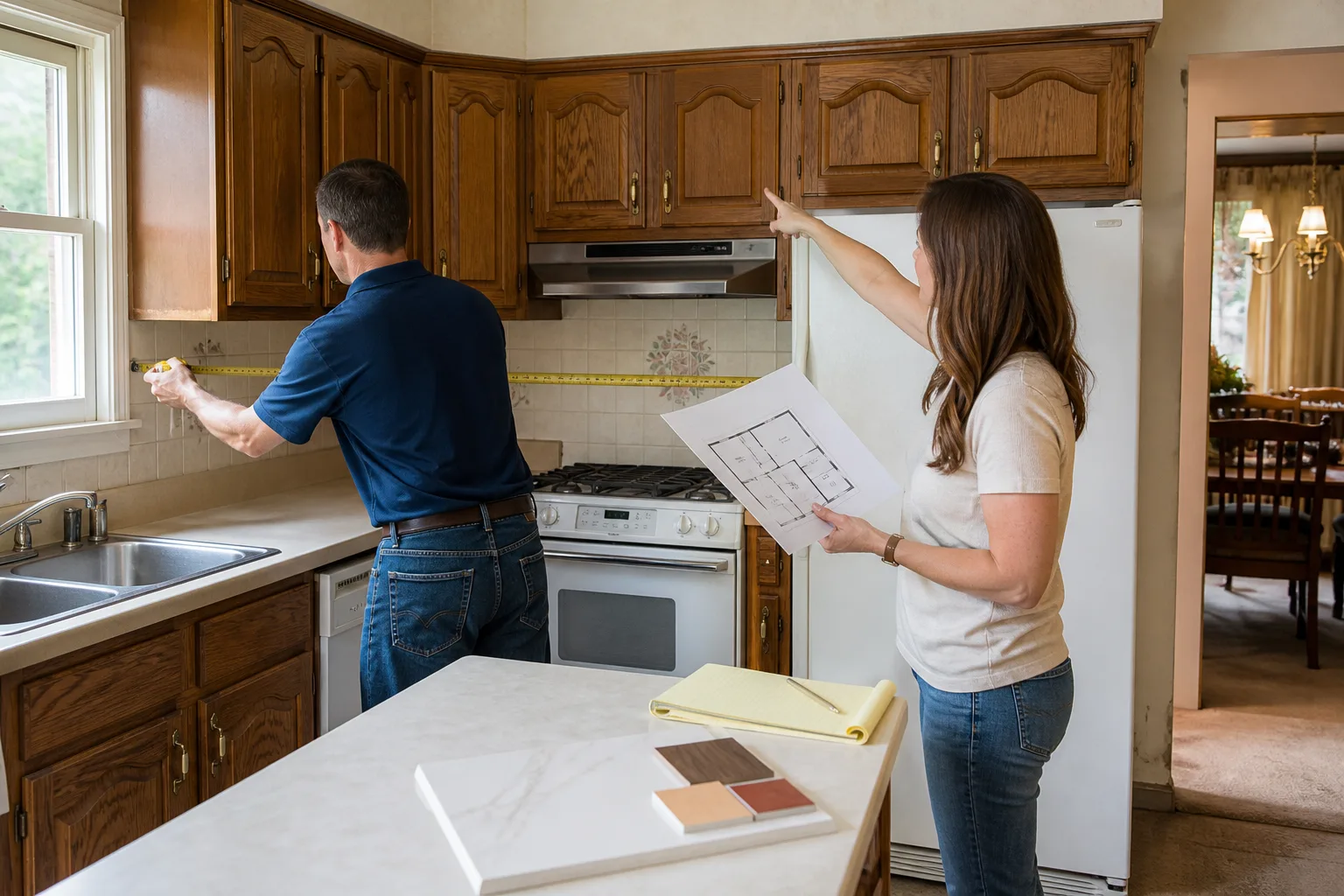
- Design and decisions (2 – 4 weeks). Measuring the space, choosing a layout, picking cabinet door style and finish, countertop material, backsplash, sink, faucet, and appliance sizes. Every open decision here is a week added later.
- Permit submission and review (2 – 4 weeks). Anything touching plumbing, electrical, or structural moves needs a permit through the City of Pomona. Plan check adds calendar time, and it’s the single most underestimated phase.
- Cabinet fabrication and delivery (4 – 8 weeks). Semi-custom cabinet lines like KraftMaid and Wellborn are built to order. Your cabinets are made after you sign off, not pulled from a shelf.
- Construction (6 – 10 weeks). Demo, rough-in, inspection, drywall, cabinet install, countertop template and fabrication, tile, trim, paint, punch list.
- Countertop fabrication and install (1 – 2 weeks after template). The final domino. It can’t start until cabinets are set. More on this below.
Add it up and a comfortable whole-kitchen schedule runs 16 – 22 weeks from first meeting to final walkthrough. A bathroom remodel moves faster because the scope is smaller; the pre-construction phases still apply. If you’re weighing which room to tackle first, our bathroom remodeling in Pomona guide walks through that calendar in the same phase-by-phase way.
Phase 1: What Happens Before Demo Day
This is where projects are won or lost, and it happens long before a sledgehammer appears. The design phase isn’t decorating – it’s locking the decisions that everything downstream depends on. When a homeowner tells us their last remodel “took forever,” the delay almost always traces back to here: a faucet chosen after cabinets arrived, a range swapped two weeks before install, a backsplash material that changed the countertop thickness.
Decisions that must be final before cabinets are ordered:
- Cabinet line and door style – KraftMaid and Wellborn are common picks in Pomona kitchens because they offer semi-custom sizing for older homes with non-standard walls.
- Countertop material and edge profile – Cambria quartz, Silestone, and Caesarstone all need a firm decision and a slab or color selected before fabrication.
- Appliance specs – not just “we want a 36-inch range” but the exact model, because cabinet cutouts and electrical or gas rough-in depend on it.
- Sink and faucet – Kohler and Moen are standard, but undermount undersink dimensions affect the cabinet and countertop cutout.
- Lighting plan – recessed locations, under-cabinet runs, and switch placement all get wired during rough-in, not after.
We’ve seen a single late appliance swap push a Pomona kitchen two weeks into the future, then drag the countertop template behind it. The honest advice: budget real time for this phase rather than treating it as paperwork. In our experience, homeowners who finish design decisions in 2 weeks save more calendar time than any speed-up on the construction side.
Phase 2: Permits and the City of Pomona
Permits are where the verbal “about six weeks” timeline quietly falls apart. Anything structural, any added or relocated electrical circuit, and any plumbing move requires a permit and a plan check through the City of Pomona’s building department. That’s not red tape for its own sake – it’s the inspection that protects your resale and your safety.
What to expect during the permit phase:
- Submission to first review comment: often 1 – 3 weeks, longer in busy months.
- Plan check revisions: if the reviewer asks for changes (common with structural or egress work), add a week or two of back-and-forth.
- Inspection holds during construction: framing, rough electrical, and rough plumbing each get inspected before drywall goes up. These are scheduled stops, not optional – and a failed inspection means a fix and a re-inspection, which is a week lost.
Older Pomona housing stock – much of it built between the 1920s and 1960s – is where surprises surface. Knob-and-tube wiring, undersized or galvanized plumbing, and non-standard framing show up during demo and can require a permit amendment mid-project. That’s normal for the city’s older neighborhoods, not a sign of a bad contractor. It is a reason to leave slack in your schedule and to confirm permits are being pulled and inspections passed rather than skipped. Our general contractor in Pomona page explains how we handle permit work and older-home conditions on remodel projects.
Cabinet Lead Times and the Countertop Bottleneck
If you take one thing from this guide, make it this: your kitchen’s end date is controlled by the countertop, and the countertop can’t start until your cabinets are installed and set. Homeowners routinely plan backward from the countertop and get burned. Here’s the actual order of operations.
- Cabinets are ordered. Semi-custom lines take 4 – 8 weeks to fabricate and deliver. This runs concurrently with permit review, which is why ordering early matters.
- Cabinets are installed and leveled. This must be complete and correct before anything else. The countertop gets templated from the installed cabinets, so a wobbly cabinet means a wrong template.
- Stone is templated. A technician measures your actual installed cabinets with a physical or digital template. This happens days to a week after cabinet install, not before.
- Slabs are fabricated. The stone shop cuts, edges, and polishes your Cambria, Silestone, or Caesarstone slabs to the template. In the LA-area market, typical fabrication turn time is 1 – 2 weeks, sometimes more if your chosen slab is out of stock at the supplier.
- Countertop is installed. Only now can the sink get set, the backsplash get templated, and the final plumbing connections get made.
That sequence is why a gorgeous remnant slab on the showroom floor still can’t shortcut your date. Stone availability is its own risk variable in this area – a popular Cambria or Caesarstone color can be back-ordered. When we quote, we give you the elapsed time for the whole chain, made-to-order cabinets through finished stone, because that chain – not the crew’s pace – sets your completion date. The lesson for homeowners: pick and confirm your countertop material during the design phase, not after cabinets arrive.
Phase 3: What Happens Each Week On Site
This is the part you picture when you hear “remodel,” and it’s also where “slow weeks” confuse people. Some on-site weeks look busy and some look quiet – and the quiet ones are usually necessary, not a stalled job. Here’s roughly how a full gut remodel unfolds week by week.
- Week 1: Demo and haul-away. Cabinets, counters, and sometimes flooring come out. Expect noise and dust, and expect it to feel chaotic. It is.
- Week 2: Rough-in. New electrical, plumbing, and any framing or structural changes. This is followed by an inspection hold while the framing, electrical, and plumbing get signed off.
- Week 3: Insulation and drywall. Taping, mudding, and sanding take multiple passes with cure time between coats. It looks slow; it’s drying, not idle.
- Week 4: Cabinet installation and leveling. Floors get protected, boxes get set and shimmed true. This is the milestone that unlocks the countertop.
- Week 5 – 6: Countertop template, fabrication, and install – the bottleneck described above. Backsplash material is sorted in parallel.
- Week 6 – 8: Tile backsplash, trim, paint, and fixture install (sink, faucet, Kohler or Moen fixtures, appliance hookups).
- Final week: Punch list, final inspection, and walkthrough. This is where a written guarantee and a clean job site get proven.
Two “slow weeks” deserve a note. First, curing times – drywall compound, thinset behind tile, and grout all need to dry before the next layer goes on, and rushing them causes cracks down the road. Second, delivery windows – cabinets are heavy, made-to-order, and scheduled in advance; a late delivery is a real risk you can partly plan around by ordering early. We tell every Pomona client the same thing: if a crew is standing around a quiet room, ask why. A good answer sounds like “we’re letting the drywall cure” or “wa
See the difference
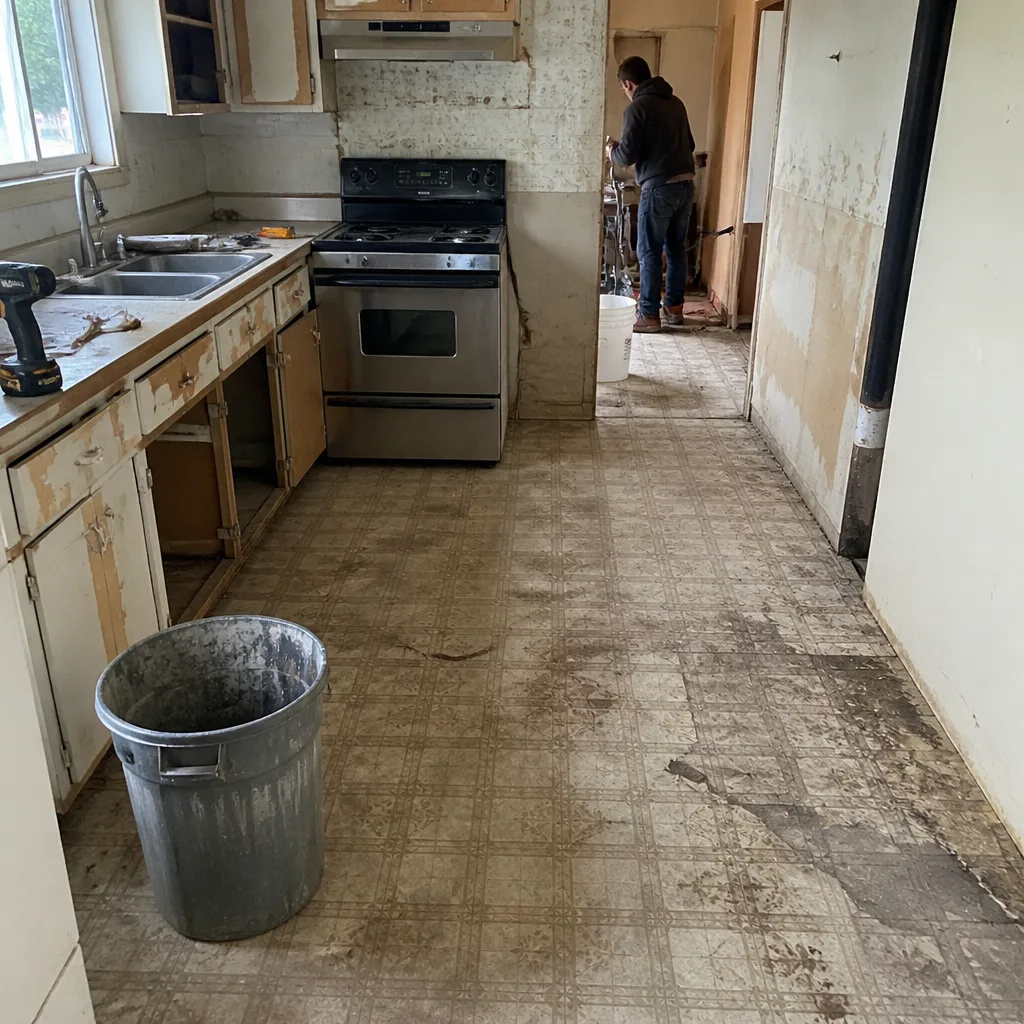 Before
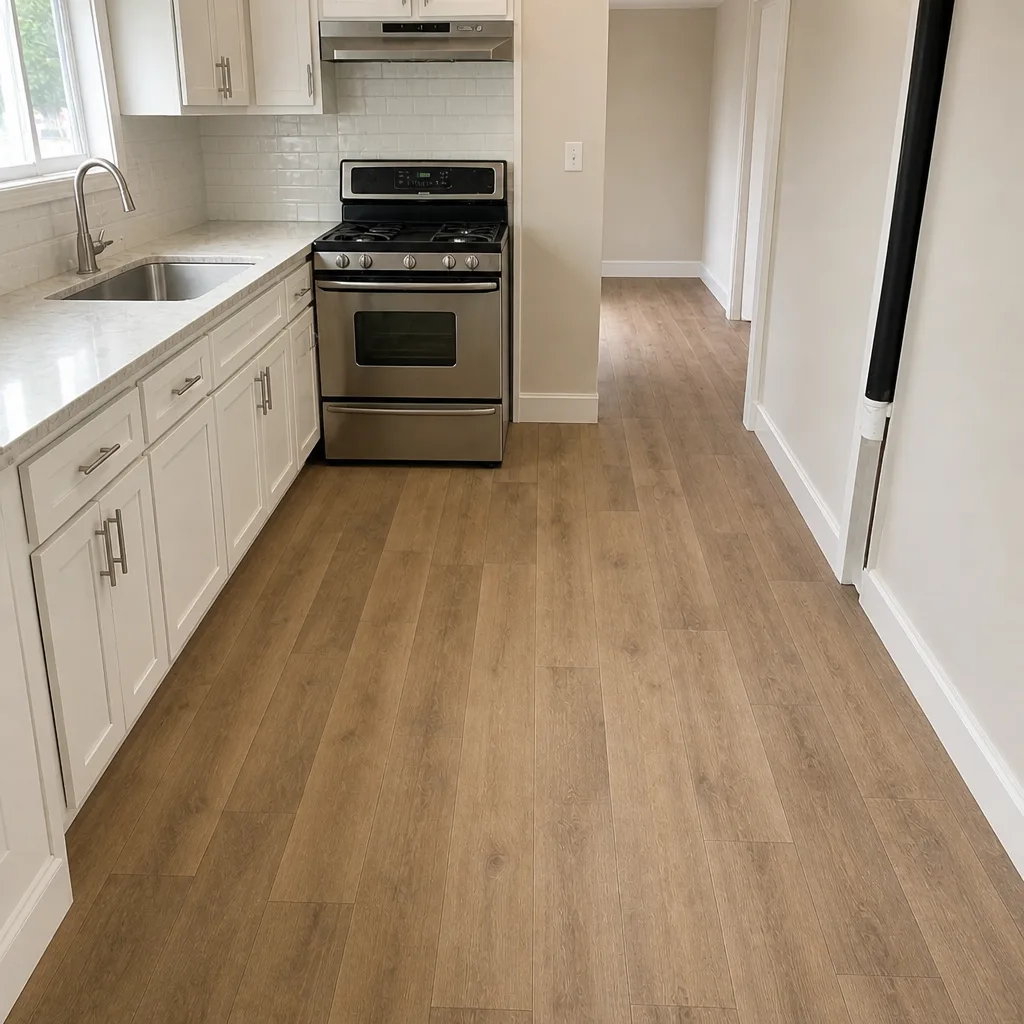 After
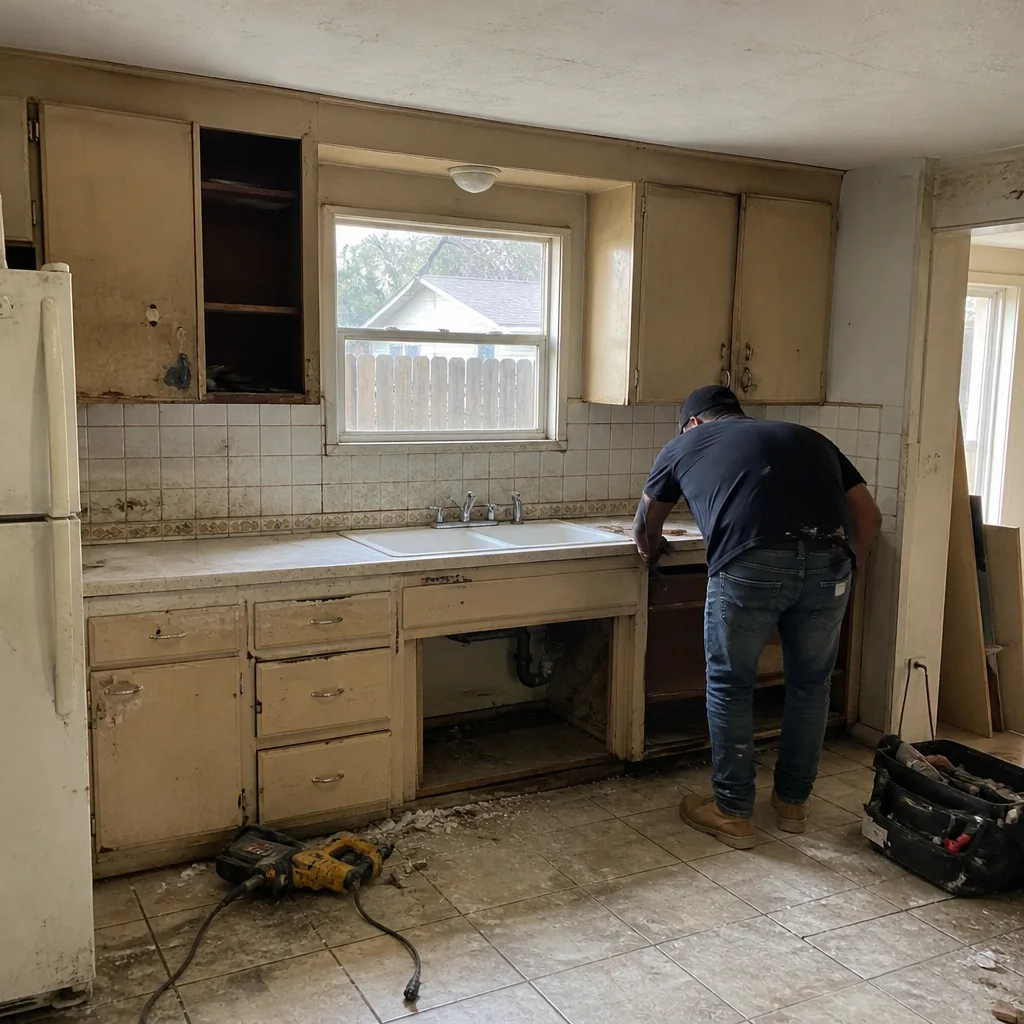 Before
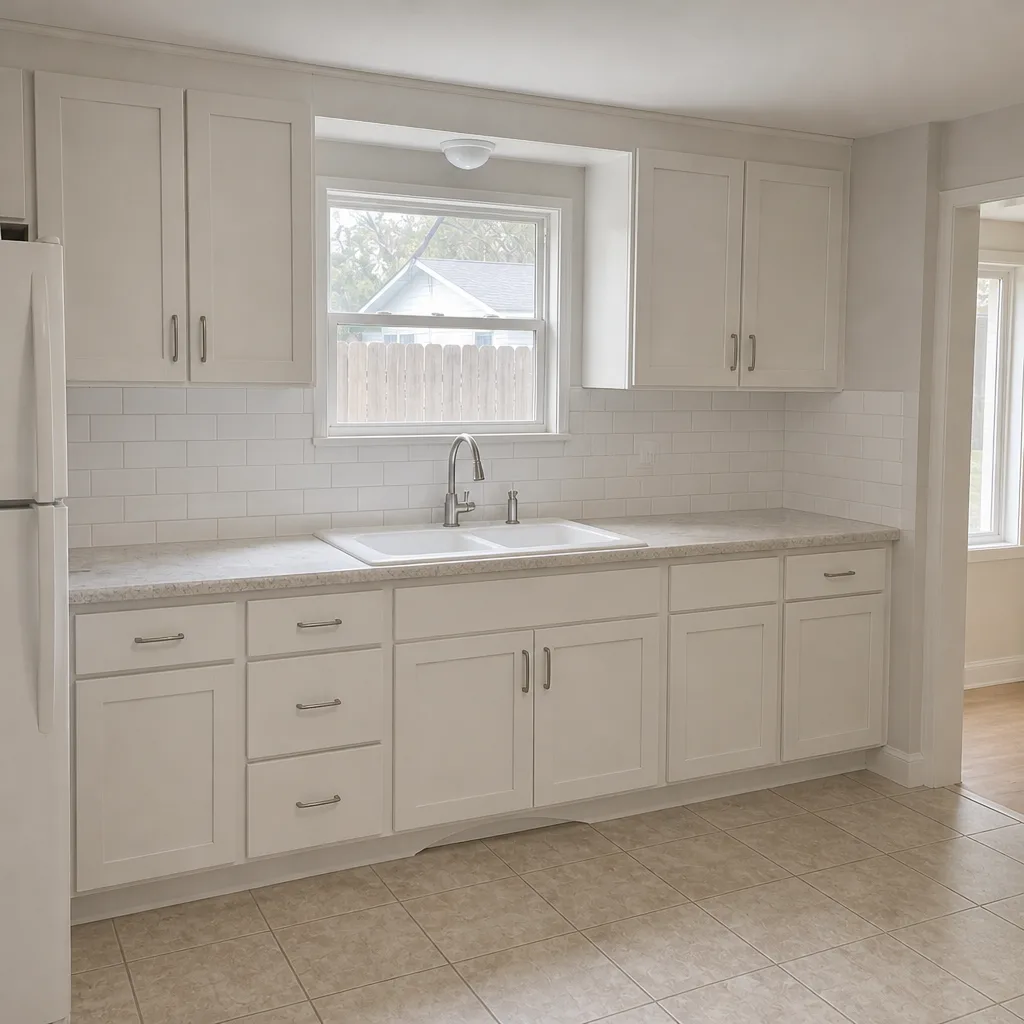 After
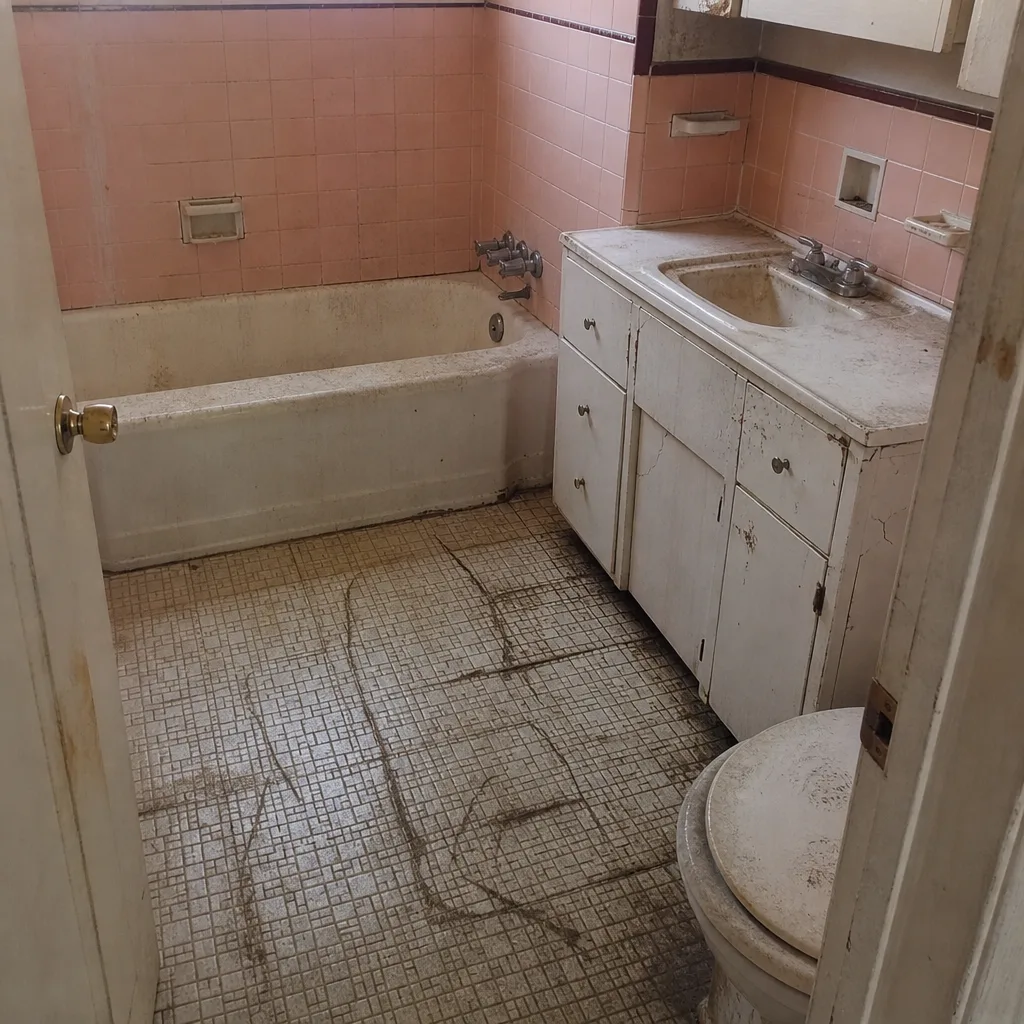 Before
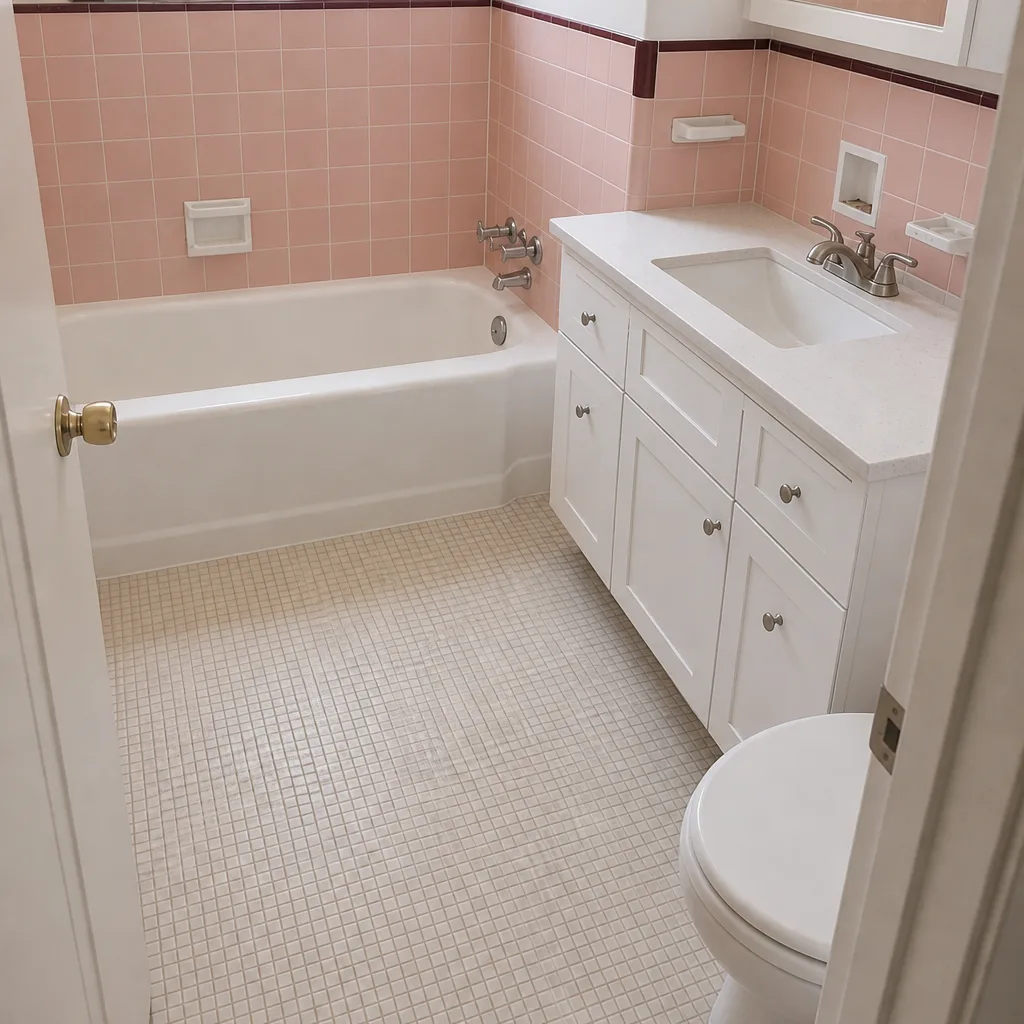 After